Choosing a conservation treatment for a unique artefact
The hull of the Mary Rose was treated with a water-soluble synthetic polymer called polyethylene glycol, or PEG, for 19 years to help in its preservation. In this blog we will discover how scientists and conservators decided on the material and techniques for the conservation of this unique artefact.
When the Mary Rose sank, she came to rest on her starboard side, over time, this side was covered in silts that protected the hull from processes like erosion and attack from woodborers. Woodborers cannot survive with low oxygen under the silts, but bacteria can and they created microscopic voids in the wood by eating the cellulose and hemicellulose within the cells. Water and other impurities filled these which increased the chance of structural collapse and dimensional change when the hull dried out.
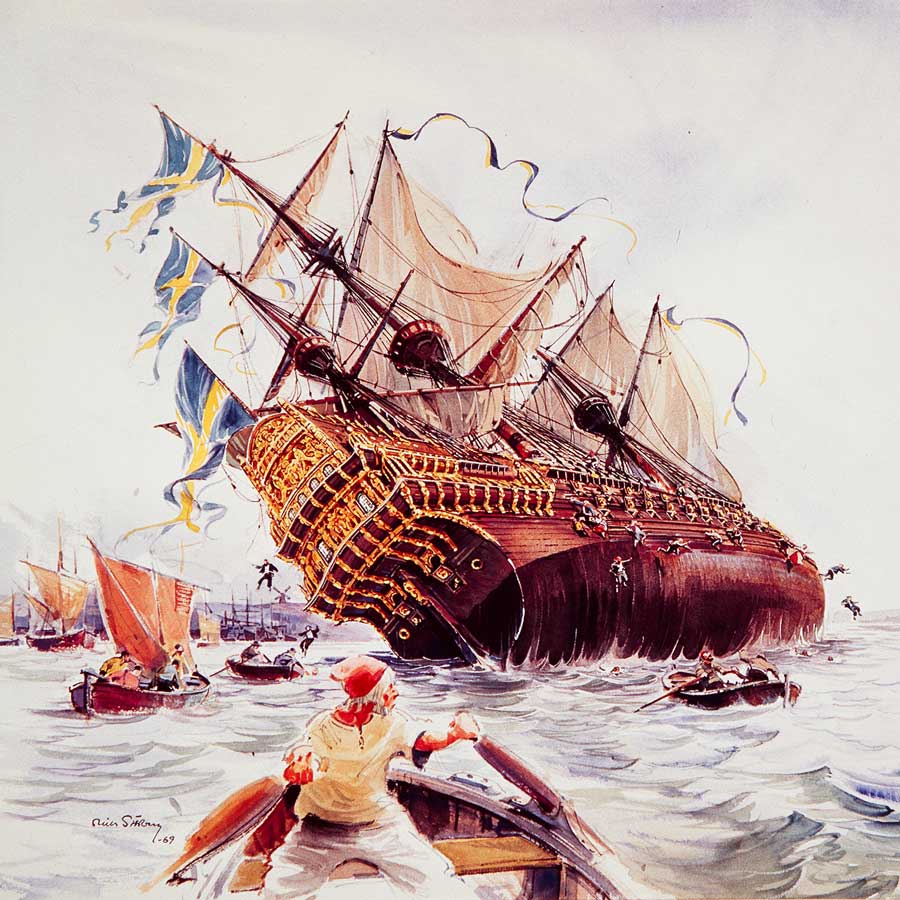
The Mary Rose Trust looked to the example of the Vasa (built 1626-1628), a ship that was raised from the seabed of Stockholm harbour in 1961, to inform the technique to conserve the Mary Rose. The Vasa was treated with PEG, which bulks out voids in the wood. PEG is a wax that is used as a bulking agent in a lot of everyday products such as toothpaste and hand cream. Its molecules can be short or long; this determines what is known as its molecular weight (MW) and can give PEG different properties. PEGs with a low MW are liquids at room temperature and mix with water, PEGs with a high MW are solids at room temperature and need to be heated to go into solution in water.
Mary Rose scientists carried out two studies to test different PEG treatments, the first called the ‘beaker scale study’, ran over three years. A larger ‘pilot-scale study’ ran for nearly 6 years from 1987 to 1993.
The ‘beaker scale study’ was to determine whether a one-step or two-step PEG treatment was more effective. In a two-step treatment a lower MW PEG penetrates the wood but remains tacky and can leak out over time. A higher MW PEG is used to pack out the edges of the wood and seal in the low MW PEG.
The results from the ‘beaker scale study’ showed 85% volumetric shrinkage of wood when dried without PEG treatment. A one-step treatment showed shrinkage of 20% and a two-step treatment had volumetric shrinkage as low as 13%. The conclusion was that the Mary Rose would be best conserved with a two-step PEG treatment.
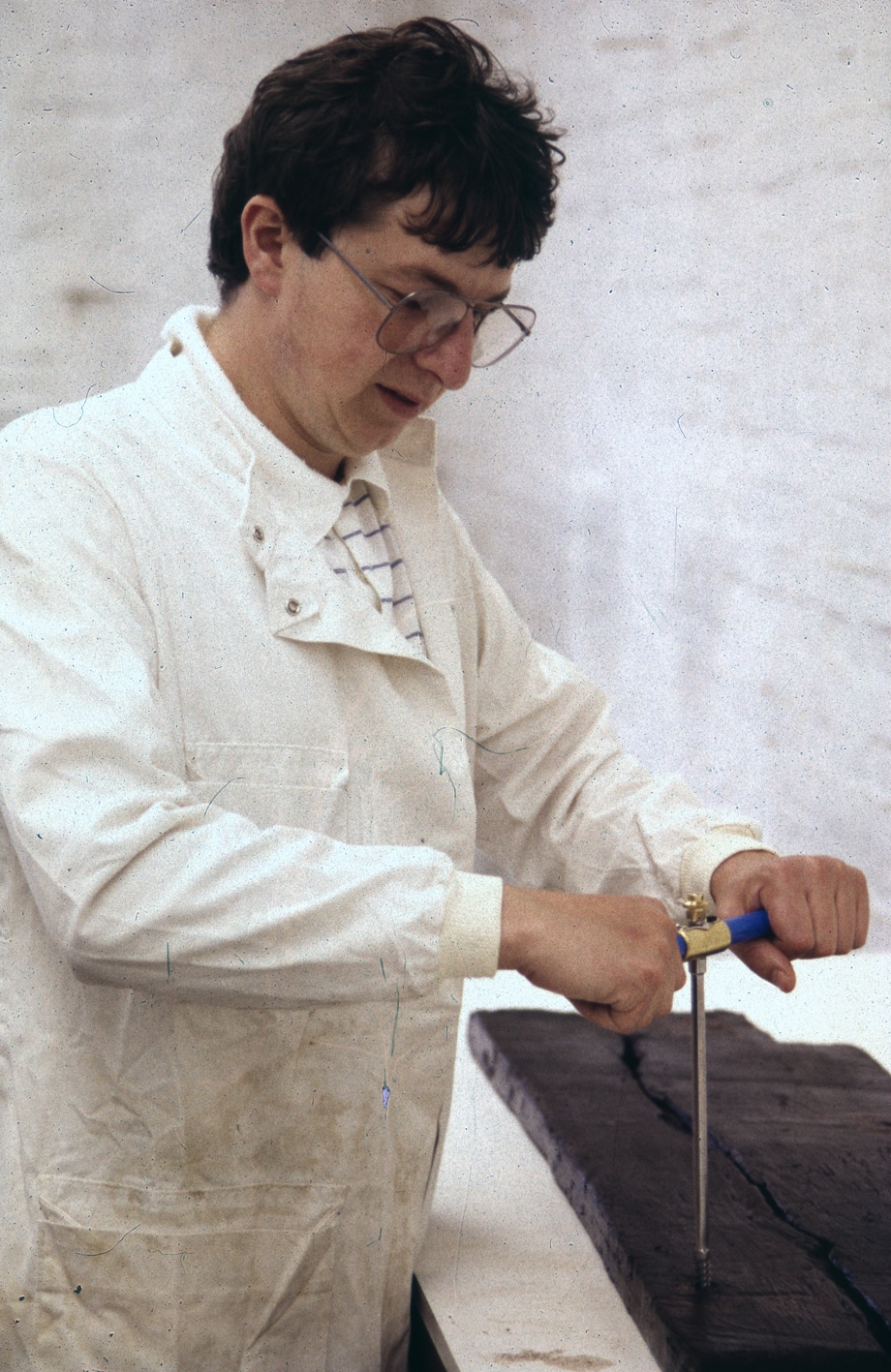
The second ‘pilot scale study’ was to determine how to apply the PEG, either by brushing on or spraying. A hand tool called an increment borer, like a narrow apple corer, was used to take samples to assess the penetration of the PEG into the wood. The PEG concentration inside the wood was compared to the PEG solution being applied, the leaking of the low MW PEG was monitored and shrinkage was measured.
With spraying, the PEG was diffused through the wood more effectively and after a period of 24 months of spraying the high MW PEG the low MW PEG was not found to be leaking out of the samples.
With the results of these two studies the approach to the conservation of the Mary Rose was decided. Active conservation of the hull of the Mary Rose started in 1994 with the hull sprayed with a low MW PEG until 2006, then a high MW PEG until 2013.
The next stage of conservation was controlled air drying. From 2013 until 2016, drying ducts were positioned around the hull to ensure even air drying. In 2016 the ducts were removed alongside other barriers, revealing the ship in its entirety for the public to visit and enjoy.
The Tale of Two Ships : Vasa – lost on her maiden voyage
In 1961, the people of Sweden brought their own historic ship to the surface, with an origin story that has, on occasion, been mistakenly attributed to someone else…