Open today: 10:00am - 5:00pm (last entry 4pm)

Why we’re not rebuilding the Mary Rose

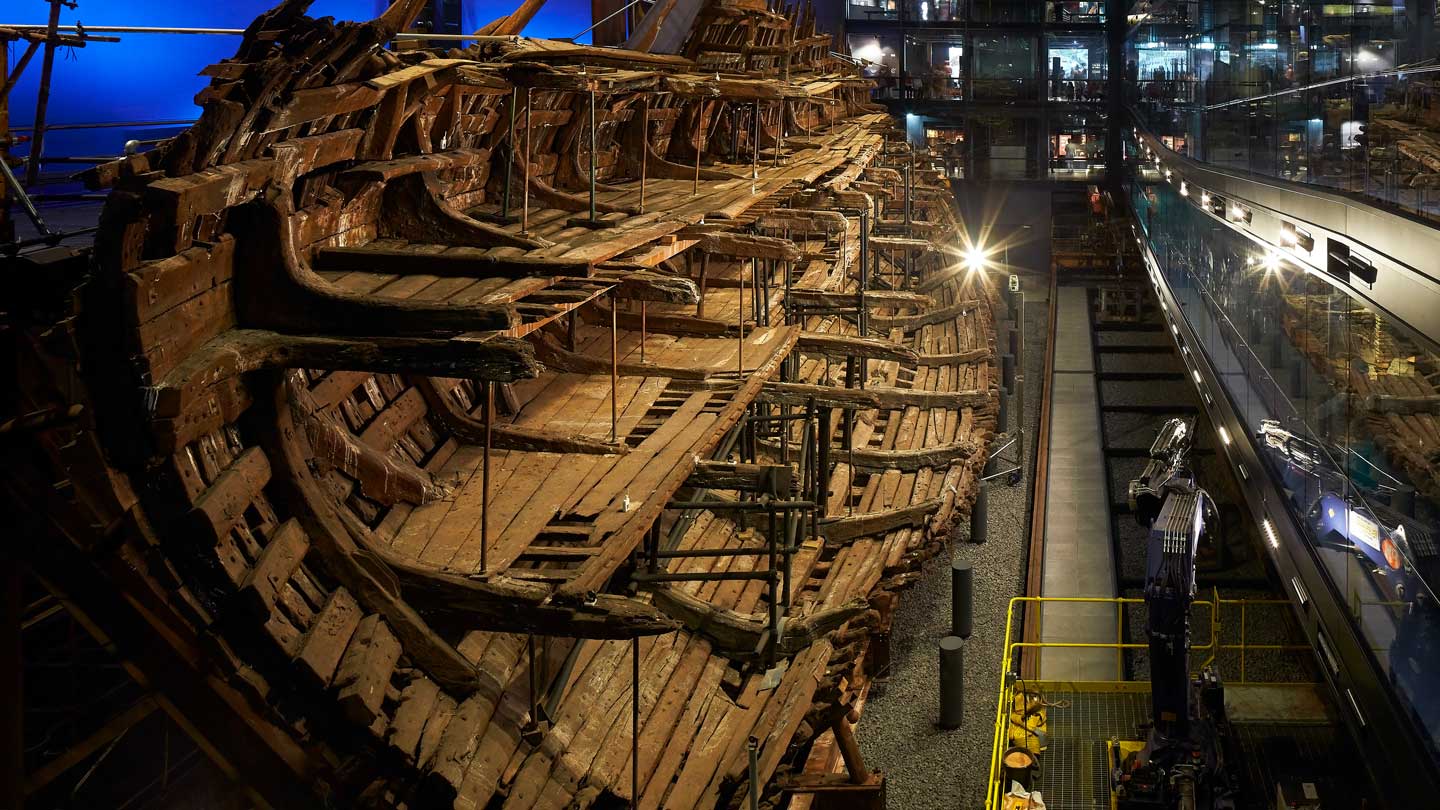
The surviving section of the Mary Rose is a Tudor-era time capsule; and the Mary Rose Trust intend to keep her this way.

The Mary Rose had only half a hull when raised from the Solent, between Portsmouth and the Isle of Wight, in 1982. When the ship sank she came to rest on the seabed on her starboard, or right-hand side. The side facing the surface, the port, or left-hand side, was the most exposed, and as a result it was broken up by tidal action, and broken down by marine woodborers and human activity like dredging and anchorage. Further human damage was caused during salvage operations in the 1830s, when explosives were used to clear sediments – it was a different time.

More about the 19th century salvage
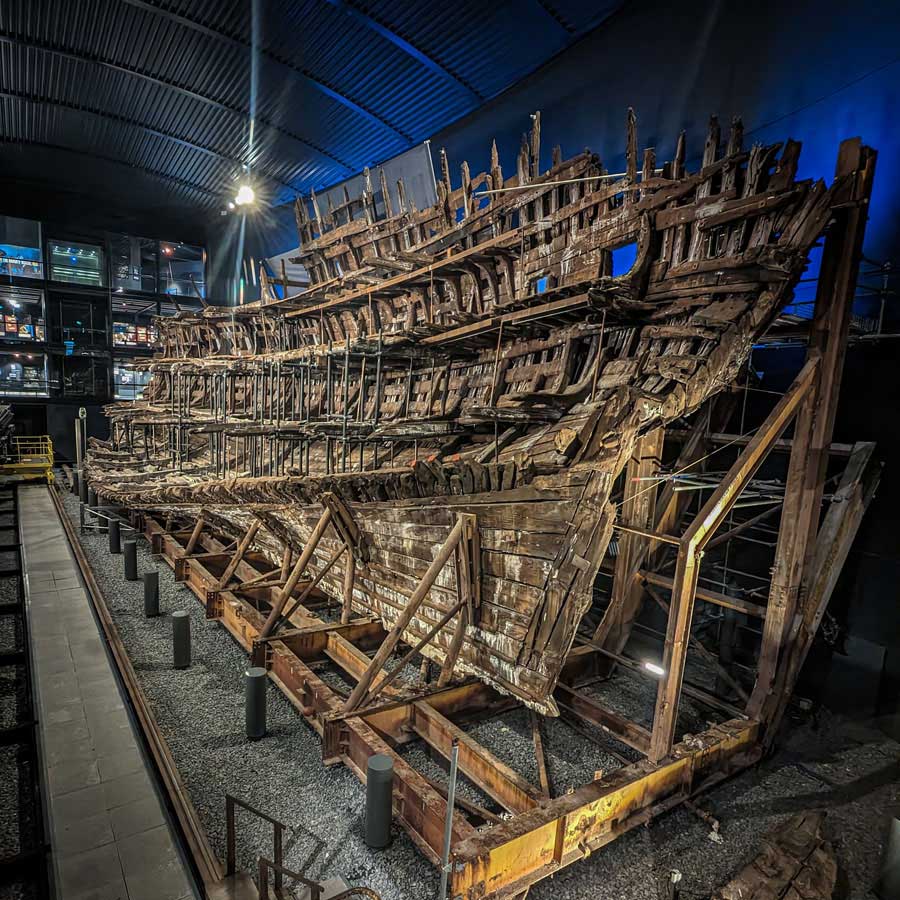
image description

The Mary Rose viewed from the stern. The exposed decks to add a certain sense of depth that you wouldn’t get from a plain hull.

Fortunately for us, the starboard side of the ship was rapidly buried by mud, which kept it safe from the woodborers due to a lack of oxygen. This half remained basically undisturbed until 1982, when the Mary Rose was excavated and raised from the seabed, and our conservation team have been looking after it ever since.

A question that the museum often gets asked is if there are plans to rebuild the missing port side of the Mary Rose, the major argument being  that “then you’d have a whole ship!”. While this would be technically true, would we really have a whole ship?

At the moment there is a 100% genuine 16th century warship, each and every timber handcrafted by shipwrights who lived, worked and died in a Tudor world. Those timbers are unique, a living piece of history that allows archaeologists and historians to learn about shipbuilding in the past. The moment you start adding new parts, you start taking something away from that.

The classically minded (or the Marvel fans, pretend all you like, but we know…) know the story of the Ship of Theseus, but perhaps a more familiar concept, at least for UK audiences, is that of ‘Trigger’s Broom’.

Trigger, a character in the BBC sitcom “Only Fools and Horses”, was rewarded for using the same broom for 20 years. When he later admitted to having replaced the head 17 times and the handle 14 times, questions were asked; had he been using the same broom, or did it become a new one with the first replacement? The same questioning can be applied to the Mary Rose; how much can you replace before a 16th century vessel becomes a 21st century replica?

image description

Ballock dagger handles with frosted acrylic blades.

In the museum we’ve tried to make it obvious when something has been replaced. Frosted acrylic has been used to replace all the missing metal blades on knives, saws and many other tools recovered from the seabed. This makes displaying the collection much easier, as not only does it show how the objects would have looked but also shows how much was actually recovered. If you see a cannon on display anywhere else, it might be a replica, or on loan from another institution. In the Mary Rose Museum, everything that looks real IS real, and if it looks too good to be true, it’s still real.

We value authenticity in the museum, and it’s always nice, when visitors ask, “That’s not real, is it?” to be able to say, “Oh yes, everything is real”. The Mary Rose may only be 40% of a ship, but she’s 100% genuine.

image description

Conservation of the Mary Rose

Find out more about how we’re looking after the Mary Rose and her objects.

Find out more
A Tale of Two Ships: Vasa and the Mary Rose

A Tale of Two Ships: Vasa and the Mary Rose

In 1961, the Swedish brought their own historic ship to the surface, which has an origin story you might have heard attributed to someone else…

Read More
Mary Rose- A lifetime on film.

Mary Rose- A lifetime on film.

The Mary Rose Trust’s audio-visual collection has been growing for over 40 years, but data storage formats have changed a lot over the years.

Read More
Money, money, money: It’s a rich man’s ship

Money, money, money: It’s a rich man’s ship

The coinage on board the ship once again shows how the Mary Rose is a snapshot of the Tudor period and holds significant evidence for all aspects of Tudor life.

Read More