Open today: 10:00am - 5:00pm (last entry 4pm)

Vasa and the Mary Rose

A Tale of Two Ships

Many get the stories of the Vasa and the Mary Rose confused, especially the idea that the Mary Rose sank on her maiden voyage! The Mary Rose served for 34 years, having several refits and campaigns before sinking in battle in 1545. The Vasa, however, sank within hours of departure on its maiden operational voyage in Stockholm, as there were flaws in the ship’s design, causing it to heel about 15 degrees to port which put the lower gunports in the water and did not recover and foundered.

The Vasa and the Mary Rose do share many similarities, both royal warships considered the best in their navy. But there are some basic differences that can be seen:

Mary Rose Vasa
Built 1510 1626
Sank 1545 1628
Discovered 1836/ Re-discovered 1971 1956
Raised 1982 1961
Years underwater 437 333
Length Approx 45m 69m
Weight 600 tonnes 1300 tonnes (estimate)
Depth of sinking 12m 32m
Years being sprayed (water and PEG) 30 17
Years being dried 3 9
image description

Image from Picryl

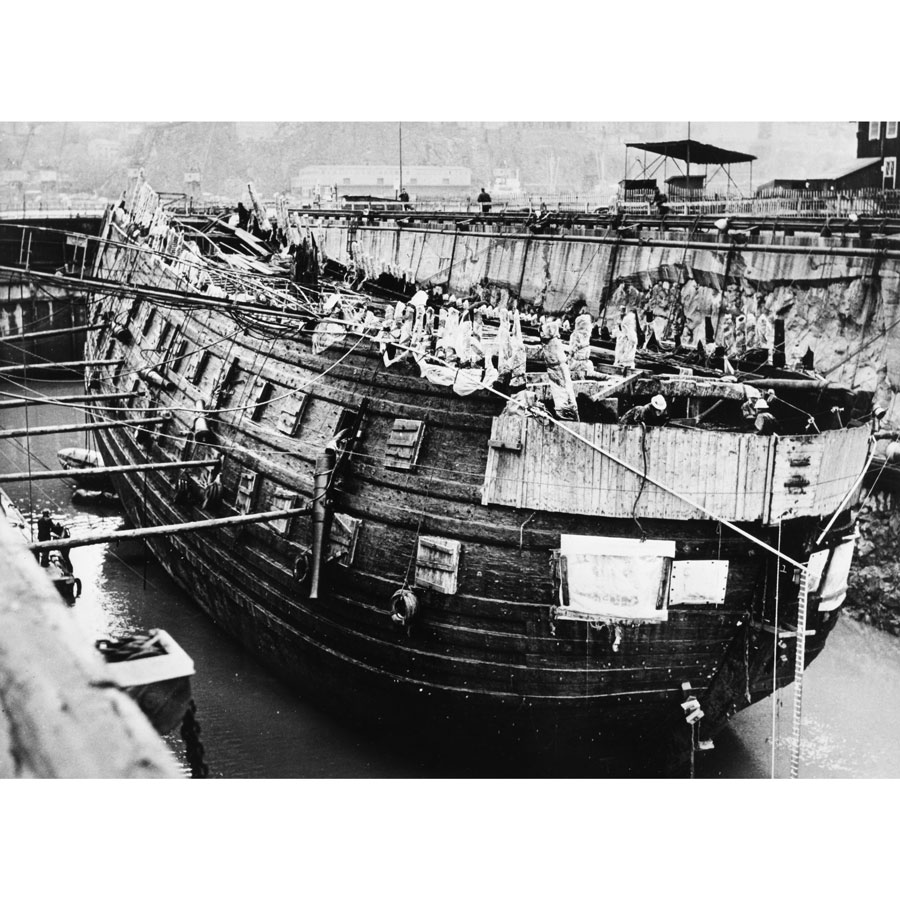
These simple differences mean a lot to the current state of the ships, most importantly the length of time under water. However, more complex differences such as the underwater conditions make huge changes to the ships’ conditions too. The Mary Rose sank in the Solent, an open and busy stretch of tidal saltwater. The starboard side was buried under silt and mud, creating an anaerobic (no-oxygen) environment which protected the hull and contents – but much of the uncovered port side was eaten by marine organisms and eroded. The Vasa, however, sank in Stockholm harbour, with brackish (low salinity), cold, low-oxygen water with no tides and a gentle, steady current. This creates an ideal environment for wooden shipwrecks, as the wood boring organisms, like shipworm, cannot survive and bacterial activity cannot occur – hence why the Vasa is more complete than the Mary Rose.

image description

Image © The Vasa Museum

Both projects began in a similar way with a man with a passion for marine history, setting out to discover a lost warship. Where Anders Franzén used manual methods of seafloor sampling to discover the Vasa, Alexander Mckee used sonar readings of the ship floor to locate the Mary Rose. But here, the two projects take unique approaches for salvage. The Vasa team dug tunnels under the hull and ran steel cables attached to water-filled pontoons underneath. These were pumped out – creating positive buoyancy and lifting the hull off the seabed and bringing it into shallower water. This process was repeated 18 times, each time letting the ship rise more, until he was floated into a drydock on his own keel.

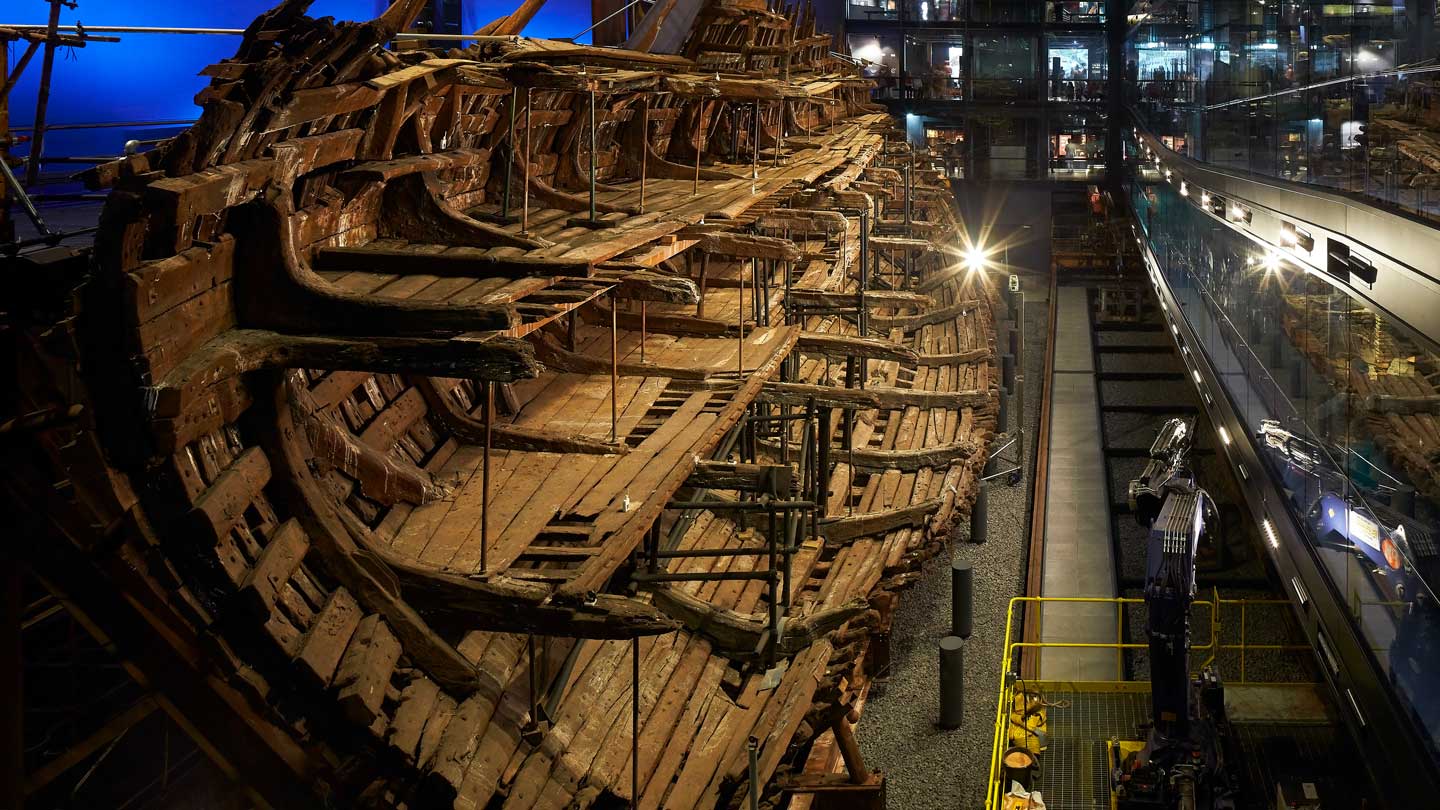
The Mary Rose took an alternative route, with divers excavating all objects and clearing as much sediment as possible while the ship was still on the seabed. Tunnels were dug under the hull so that holes could be drilled at pre-determined positions throughout the hull and bolt fixings fitted upon which cables could be secured. These were then attached to the Underwater Lifting Frame (ULF). Once the hull had been slowly jacked up off the seabed, Tog Mor – a large, floating crane – lifted the Mary Rose to reposition her over a steel cradle. Finally, the ULF, cradle and hull were lifted as one above the surface, on 11th October 1982.

image description

Image from Picryl

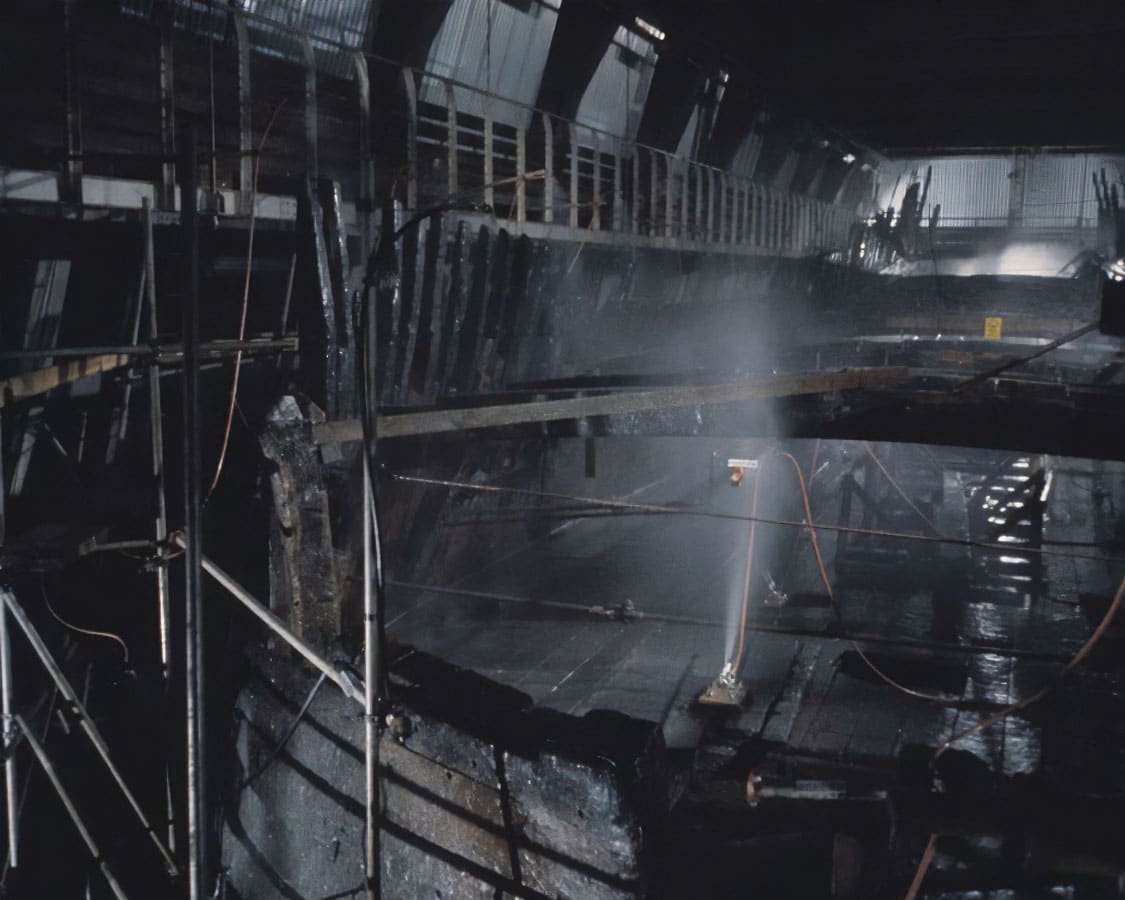
Both ships used similar methods of conservation, clearing the wood of salt and debris using freshwater sprays, before switching to a Polyethylene Glycol (PEG) solution. The water-soluble PEG compound helps to bulk out the damaged timbers and mitigate wood shrinkage when drying begins. With the Vasa going into conservation first, their method inspired the Mary Rose team, giving evidence to the effectiveness of the new PEG treatment on this scale.

Degraded wood is weak and sags under its own weight, causing cracking and deforming of the structure. Both museums track this movement using manual and automated methods and use a carefully controlled environment to help stabilise the wood. The Mary Rose sits in the original steel lifting cradle, with a series of titanium and steel supports holding the elements in place. She was tilted to an almost upright position in 1985. As the Vasa’s large hull is over 98% complete, he was floated into dry dock as a whole. However, a new support system is being considered for the long-term support of the hull structure. This will increase the cradle to 27 support points, as well as an internal skeleton to support the ships intact decks. Similar struggles can be cited by other complete hulls such as the HMS Victory, who now use hydraulic supports to counteract this sagging.

image description

Image from Picryl

During the Vasa’s salvage, the original bolts that held the hull together were replaced with mild steel and original nails replaced with stainless steel so the hull could remain whole. Over the long PEG treatment of the ship, these bolts corroded at an accelerated rate causing the diffusion of iron ions within the wood. Thes ions mixed with a large abundance of sulphur and other compounds, already within the wood from the burial, and formed iron sulphides and acidic compounds. These acids damage the wood, so the Vasa project needed to replace around 5,500 iron bolts with new stainless-steel bolts, that are rust-proof and lighter. The Mary Rose’s hull contained only a few iron bolts within its structure – most fixings within the hull are wooden nails (or ‘treenails’), but iron inclusion into the wood remains a problem. Both museums are leading research projects into the damaging effects of iron and sulphur accumulation in archaeological wood and how to treat it.

Overall, despite the differences in the ships themselves, the methods used to keep them safe and preserved for the future can be related. The Vasa project pioneered a lot of invaluable techniques that the Mary Rose team have learned from and both ships now learn from each another in new methods of conservation and benefit from shared knowledge and expertise. The main fact is that the two museums share is a passion for keeping these ships and their stories alive for future generations!

image description

The Vasa Museum

Discover more about the story of this spectacular Swedish vessel

Find out more
Mary Rose- A lifetime on film.

Mary Rose- A lifetime on film.

The Mary Rose Trust’s audio-visual collection has been growing for over 40 years, but data storage formats have changed a lot over the years.

Read More
Money, money, money: It’s a rich man’s ship

Money, money, money: It’s a rich man’s ship

The coinage on board the ship once again shows how the Mary Rose is a snapshot of the Tudor period and holds significant evidence for all aspects of Tudor life.

Read More
Stories from the past: a personal relic from the Mary Rose

Stories from the past: a personal relic from the Mary Rose

Personal possessions hold great importance in exploring life on the Mary Rose. We can use them to learn more about the people who owned them, their beliefs and roles.

Read More